Survivorship and Reintegration Taskforce

Chairs

Dr. Vandana Dhamankar
Mr. Chandan Kumar

Goal Statement

Key Focus Areas

  • Develop surveillance/follow-up guidelines for childhood cancer survivors through Delphi Consensus.
  • INPHOG C2S study expansion to capture national survivorship data.
  • Conduct research studies to understand the long-term effects of childhood cancer treatments and survivorship outcomes in India.
  • Fertility Preservation position statement.
  • Develop policy and pathway for childhood cancer survivors.
  • Launch public and/or survivor awareness .
  • Create a Survivor Panel.
  • Establish survivorship clinics or dedicated survivorship programs.
  • Develop survivorship care plans for childhood cancer survivors.
  • Establish fertility preservation working group.
  • Develop fertility preservation tools, templates, checklists and promotional material.
  • Advocate and explore solutions for equity of access to fertility consultation and preservation.
  • Training for HCP relevant to survivorship.
  • Strengthen educational interventions for survivors, Collaborate with educational institutions, vocational training institute, focussing on job placement and skill development.

Glimpses of Work

Context

There is a growing need for standardized survivorship care for childhood cancer patients in India. While global guidelines such as those developed by the Children’s Oncology Group (COG) provide comprehensive frameworks, they often require adaptation to align with the local healthcare infrastructure, available resources and regional patient needs in Indian Context.

Purpose

The Delphi Consensus initiative was undertaken to adapt the COG guidelines to the Indian context through an evidence informed and consensus driven process. The goal is to develop practical, feasible and contextually relevant guidelines that address long-term follow-up and late effects in childhood cancer survivors across diverse healthcare settings in India.

Activities Undertaken

As part of this initiative, a Round 1 Survey titled “Delphi Consensus for Guidelines on Survivors of Childhood Leukemia in India” was conducted to gather expert opinions on key aspects of survivorship care.

To review and discuss the results of this survey, a two-day meeting was organized at AIIMS, New Delhi, on August 3 to 4, 2024, in collaboration with the INPHOG Late Effects Subcommittee and PHO members. The meeting focused on reviewing Phase II proposals, ongoing and future studies on cancer survivorship and late effects, and developing Delphi-based guidelines for long-term follow-up on ALL, AML, and CML, which are key projects under the Survivorship Taskforce.
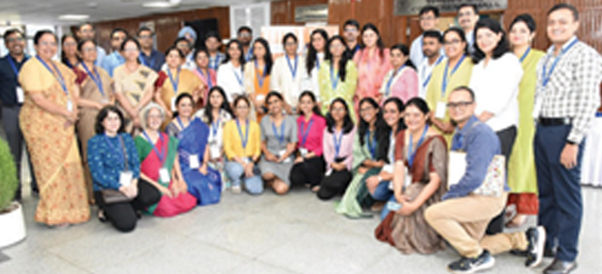
Survivorshop & Late Effects Meeting - AIIMS, New Delhi, 23rd August 2024
Survivorshop & Late Effects Meeting - AIIMS, New Delhi, 4th August 2024

Following the analysis of the first round, a Round 2 Survey was conducted in October 2024, incorporating revised questions based on feedback from the initial round. Experts received aggregated responses from Round 1 and were asked to reconsider their ratings in light of collective insights and discussions. This iterative process helped refine and align recommendations to achieve a national consensus on adapted childhood cancer survivorship guidelines for India.

Additionally, Lymphoma Round 1 was conducted online, and the results were shared with participants, followed by an online discussion session. Lymphoma Round 2 is now being planned to further build consensus and finalize the adapted guidelines for this cancer type.

Next Steps

Building upon the progress achieved, upcoming Delphi consensus rounds are planned for CNS Tumours & Retinoblastoma, Abdominal Tumours, and Sarcomas, which are expected to be completed by 2026. These efforts aim to create comprehensive, Childhood cancer survivorship guidelines in India.

Context

Childhood cancer survivorship care in India is an evolving area that requires coordinated efforts to ensure not only extended survival but also improved quality of life for survivors. To address existing challenges and streamline national strategies, regular reviews and collaborative planning are essential among key stakeholders.

Purpose

The Survivorship Core Committee convened to review the progress of ongoing initiatives, discuss operational and strategic challenges and outline next steps to strengthen long-term survivorship care programs in India.

What We Have Done

The Survivorship Core Committee meeting was held on 22nd August 2025 at AIIMS, New Delhi, under the leadership of Dr. Rachna Seth. The meeting brought together key representatives from ICCI, INPHOG, and partner institutions. Major discussions included:

  • C2S Study: The group discussed the future of the Childhood Cancer Survivorship (C2S) registry, currently expected to follow ~8,500 survivors by 2029. A sustainable in-house database coordinated from AIIMS is being explored to continue beyond that.
  • Data Quality & Security: Issues like missing data, portal gaps, and data confidentiality were raised. The team agreed to strengthen checks, create clear SOPs, and ensure patient data safety.
  • Survivorship Clinics & Resources: Work is underway to create a national directory of survivorship services, alongside recommendations for structured clinics across India.
  • Role Clarity: ICCI will focus on advocacy, while INPHOG will lead on research and guidelines, with joint efforts in capacity building.
Next Steps

Plans include expediting Delphi guideline publication, exploring a nurse-led survivorship course, and improving enrolment in ACT (After Cancer Treatment) clinics. This meeting underlined the shared commitment of ICCI, INPHOG, and partners to not only extend survival but also enhance the quality of life for childhood cancer survivors in India.

Context

Comprehensive survivorship data is essential to understand long-term outcomes and improve the quality of care for childhood cancer survivors in India. However, existing pediatric cancer registries face challenges such as inconsistent data capture, limited follow-up information, and inadequate representation from all regions.

Purpose

The expansion of the INPHOG Childhood Cancer Survivorship (C2S) study aims to strengthen national pediatric cancer registration by improving data capture and entry into the national registry. The objective is to broaden the scope of survivorship registries to enable consistent, long-term follow-up and enhance the quality of survivorship care across India.

What We Have Done

The INPHOG C2S study has been expanded to collect data from diverse regions and treatment centers across the country. Currently:

  • INPHOG has 58 member institutions across India.
  • C2S study participation: 29 centers are actively contributing survivorship data.
  • ICCI support: 6 staff members supported by ICCI are engaged across nine centers to facilitate data collection and coordination.
Next Steps
  • Continue strengthening data entry and monitoring systems to ensure comprehensive and high-quality survivorship data.
  • Work towards integrating survivorship data within a sustainable national framework to support policy and program development for childhood cancer care.

Context

Rehabilitation is a critical yet often under addressed component of comprehensive childhood cancer care. It plays a vital role in supporting patients and survivors to regain physical, psychological, and social well-being post-treatment. However, the absence of a structured, integrated rehabilitation framework poses challenges in delivering holistic survivorship care across India.

Purpose

The initiative aimed to initiate dialogue and build awareness on the importance of rehabilitation in pediatric oncology. The objective was to bring together diverse stakeholders to explore opportunities for collaboration, identify key gaps, and lay the groundwork for developing a comprehensive national rehabilitation framework.

What We Have Done

An introductory session on rehabilitation was conducted, engaging over 85 participants, including survivors, parents, doctors, NGOs, and healthcare professionals. The session focused on raising awareness about the need for structured rehabilitation services and setting the tone for continued engagement. It fostered collaboration, dialogue, and knowledge sharing among stakeholders to strengthen future rehabilitation efforts.

Next Steps
  • Develop a roadmap for an integrated national rehabilitation framework for childhood cancer survivors.
  • Facilitate follow-up workshops and expert consultations to define key components and implementation strategies.
  • Promote cross-sector collaboration among hospitals, NGOs, and rehabilitation professionals to strengthen support services nationwide.
If you have any more information to share/we have missed information/have a feedback
What’s Happening at ICCI

Latest News